Cantor Arts Center
328 Lomita Drive at Museum Way
Stanford, CA 94305-5060
Phone: 650-723-4177

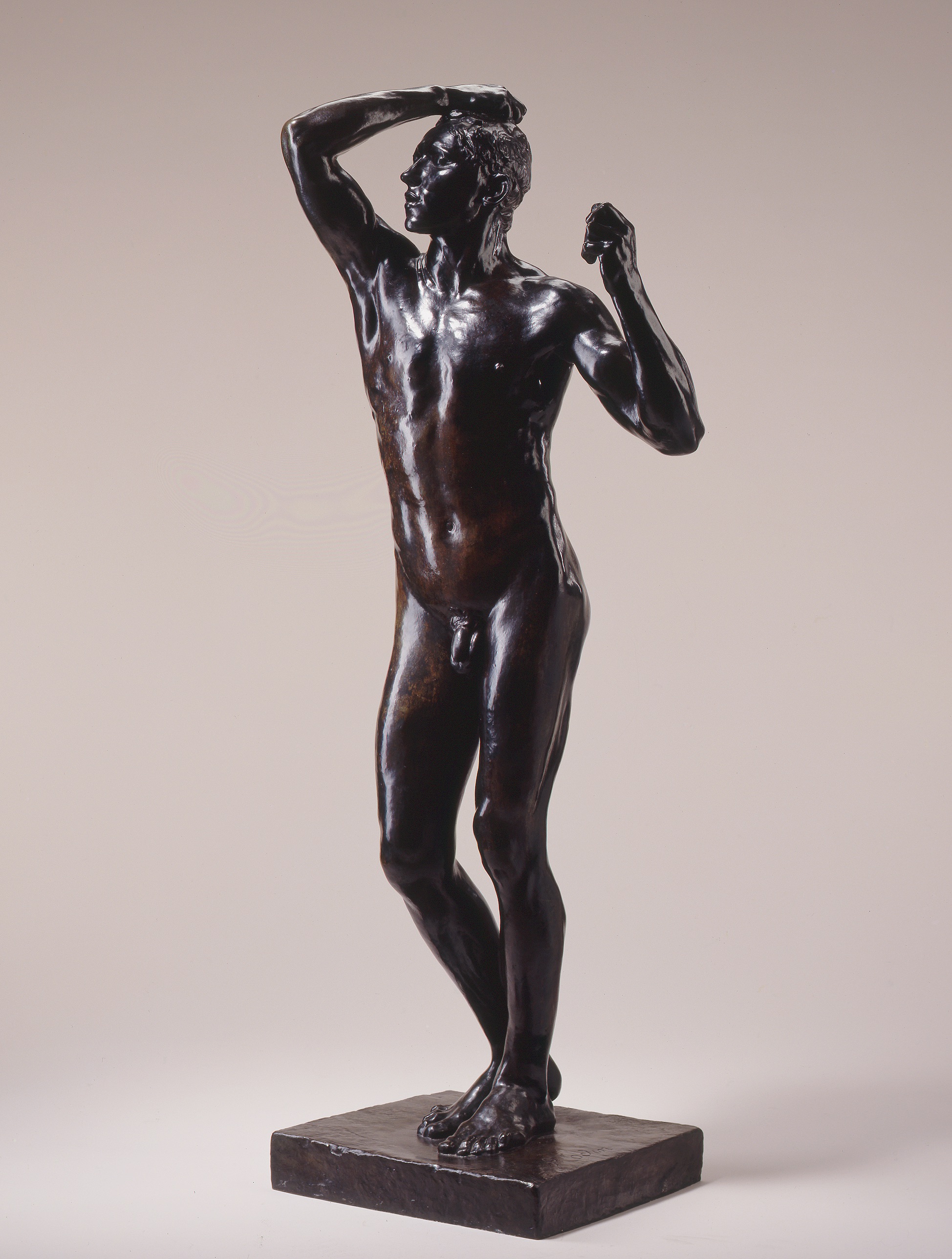
Auguste Rodin (France, 1840–1917), The Age of Bronze (L’âge d’airain), 1875-1876. Bronze, cast c. 1920. Gift of the B. Gerald Cantor Collection, 1983.300
At the time of his death, Auguste Rodin (France, 1840-1917) was counted among the most renowned artists in the world. A century later, after numerous reassessments by generations of art historians, Rodin continues to be recognized for making figurative sculpture modern by redefining the expressive capacity of the human form. This installation spans three galleries and features nearly 100 Rodin sculptures essential to telling his story and representing his groundbreaking engagement with the body. Drawn from the extensive holdings of the Cantor Arts Center, the largest collection of sculptures by Rodin in an American museum, it also presents comparative works by his rivals, mentors, admirers, and imitators.
Check out the Cantor for publications about August Rodin and his works, available for purchase in the Cantor's Atrium.
Auguste Rodin (France, 1840–1917), The Three Shades (Les Ombres), 1881-1886. Bronze, cast in 1978. Gift of the Iris and B. Gerald Cantor Collection, 1998.360
Auguste Rodin (France, 1840–1917), Despair (L’Désespoir), 1887-1890. Bronze. Gift of the Iris and B. Gerald Cantor Foundation, 1974.62
Auguste Rodin (France, 1840–1917), Victor Hugo, known as the Bust to the Illustrious Master (Victor Hugo, buste dit À l’Illustre Maître), 1885, first modeled 1883. Bronze. Gift of Cyril Magnin, 1971.5