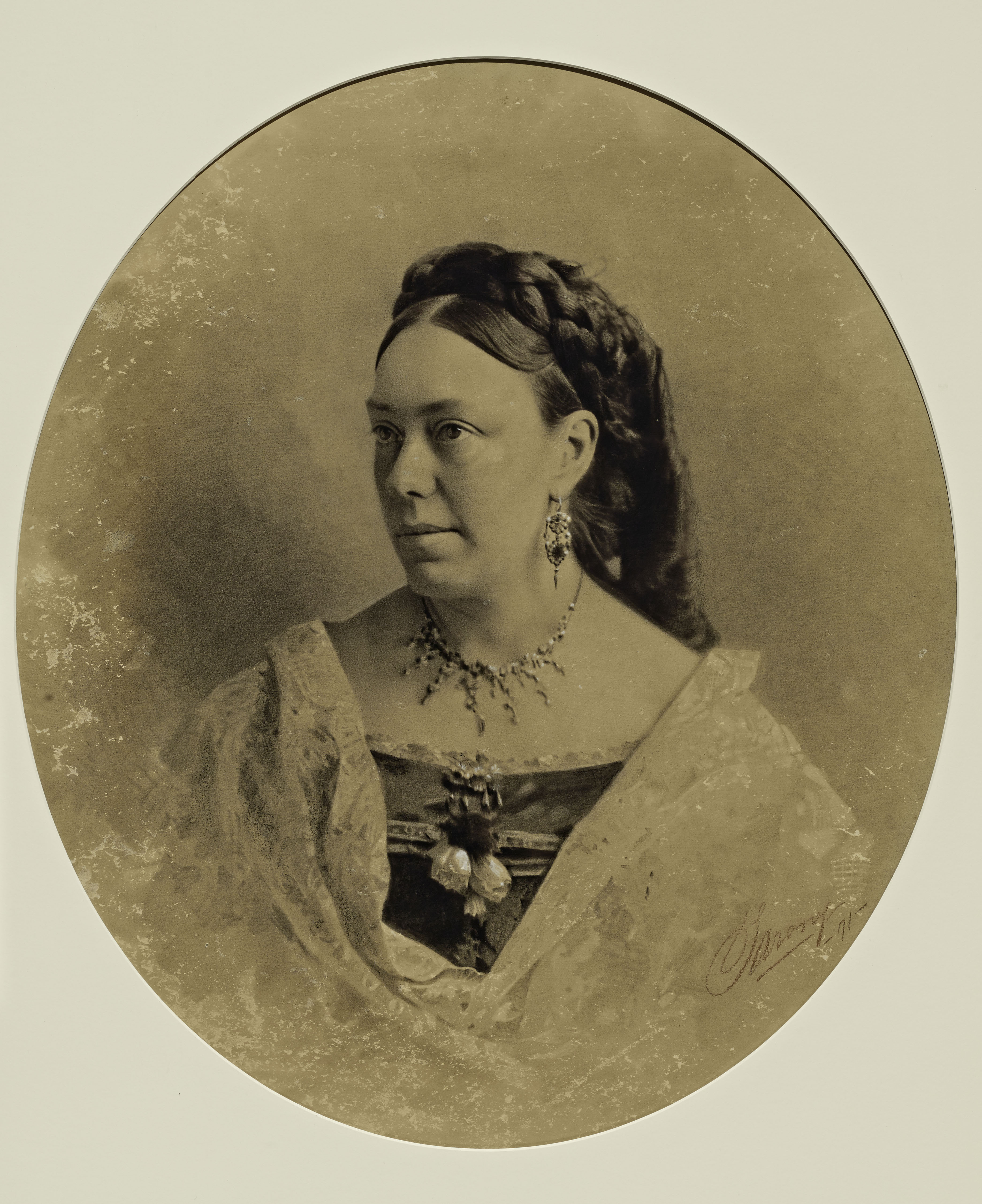
JANE!
An intimate exploration of Gilded Age excess and the enigmatic life and death of Jane Stanford
July 2, 2026 — May 18, 2028
Cantor Arts Center, Stanford University, Stanford Family Collections, JLS.18217
The Cantor Arts Center at Stanford University is pleased to present JANE!, an exhibition exploring the aesthetic and affective excesses of Stanford University co-founder and matriarch Jane Stanford (1828–1905), opening on July 2, 2026. Curated by Patrick R. Crowley, Associate Curator of European Art, the presentation brings together objects from Jane’s expansive personal collection, including fine art, travel souvenirs, keepsakes, archaeological artifacts, and spiritual ephemera, to offer a greater understanding of the life and worldview of a complicated figure whose controversial presence on Stanford’s campus has only grown following her mysterious and unsolved death by poisoning at the age of 76. Curious and eccentric, JANE! reveals the campy underside of a familiar biography and even more well-known murder mystery.
Founded in memory of Leland and Jane Stanford’s only son, Stanford University–officially chartered as Leland Stanford Junior University–emerged from the couple’s immense Gilded Age fortune built via railroad expansion and accumulation of unprecedented political power in the American West. Following the deaths of her son and husband, Jane assumed control of both the family fortune and the fledgling university, committing herself to philanthropy on her own terms while shaping Stanford’s early development through a highly personal and often controversial vision.
As co-founder and head of the board of trustees, Jane advanced progressive positions, including the admission of women, and oversaw the construction of key campus landmarks such as the museum (now the Cantor), the chapel, and the monumental memorial arch. At the same time, she inserted herself directly into the hiring of faculty and university leadership, frequently clashing with founding president David Starr Jordan and generating tension among the university’s academic and administrative staff. Jane’s authority, exercised at a distance from the East Coast’s academic centers, positioned Stanford as both an ambitious and unconventional institution, deeply dependent on her wealth and will.
JANE! foregrounds the material traces of this life, featuring a sumptuous gown acquired during Jane’s frequent travels to Europe, fine art acquisitions and commissions including a monumental painting of her jewels, which she famously attempted to sell to fund book purchases for the library, Egyptian artifacts acquired at great cost for the museum, and personal objects from her travels, including a significant collection of Japanese and Chinese art. Also on view are more uncanny materials, including death masks and spiritual ephemera that reflect her turn toward religion and séances following profound personal loss.
These objects are set against the unresolved circumstances of Jane’s death. Following a poisoning attempt on January 14, 1905, in her San Francisco mansion, she fled town with her sights set on Asia, reportedly intending to remove Stanford University President David Starr Jordan from his post. She never returned to campus. During a stopover in Honolulu, Jane died on February 28, 1905, after ingesting strychnine, a bitter alkaloid commonly used as a pesticide. In the aftermath, Jordan traveled to Hawaii, where Jane’s death was eventually attributed to natural causes despite significant evidence to the contrary. Long obscured and only revisited decades later, the mystery remains central to her legacy.
Drawing extensively from the Cantor’s archives, including rarely seen and previously unexhibited materials, this highly revealing exhibition advances a deeper understanding of Jane’s life and worldview, shaped by an ascent to extraordinary wealth and power and sustained engagement with personal tragedy. JANE! brings forward the contradictions of her life to offer a portrait at once intimate and excessive, illuminating the texture, strangeness, and theatricality of the Gilded Age while revealing a figure at once formidable, peculiar, and unexpectedly human.